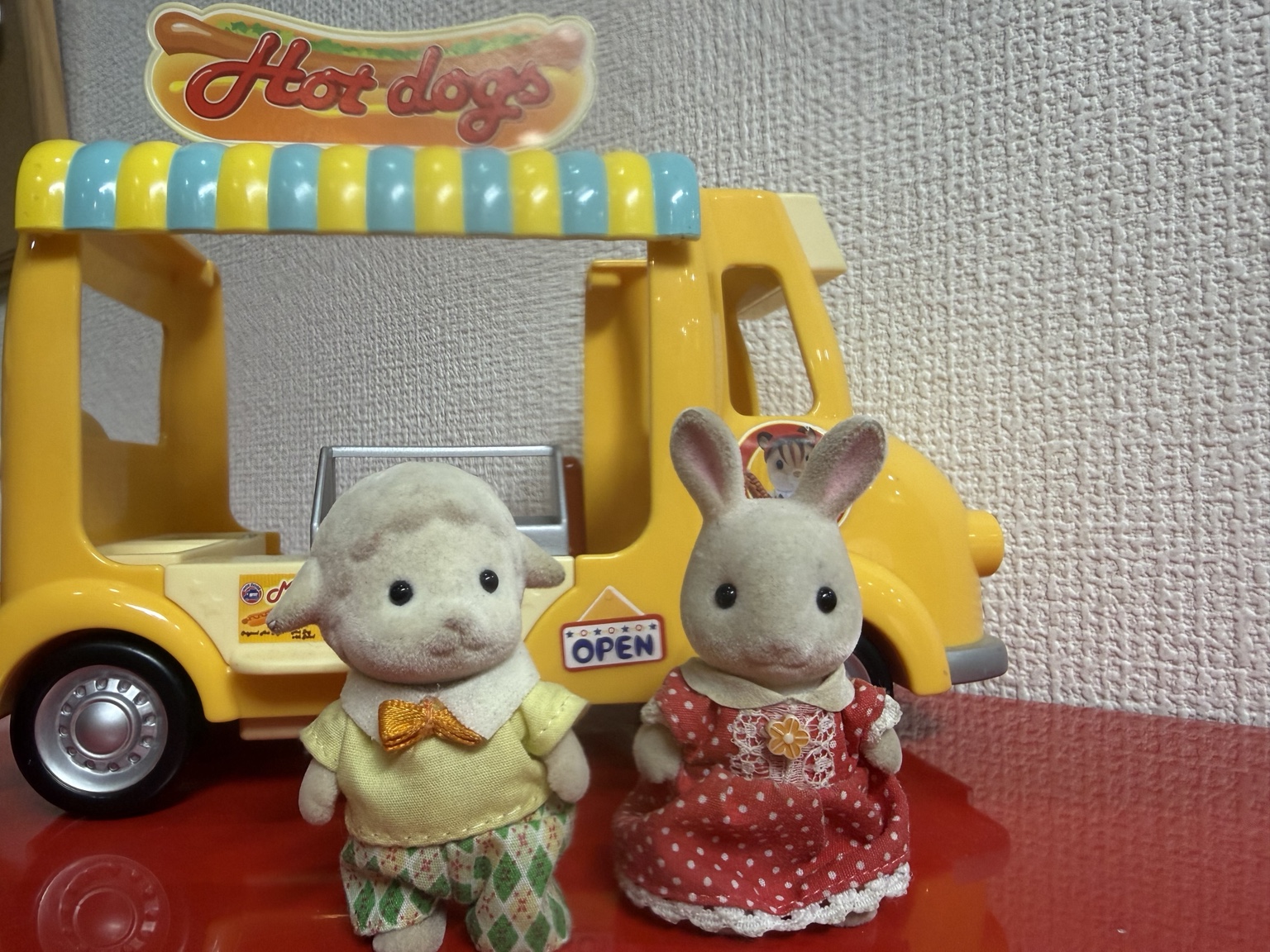
ジャックとケイトをご紹介します!
もちろん、これはシルバニアファミリーのキャラクターの正式な名前ではありません。千葉市の英会話教室ミッキーキッズで、私たちがつけた名前です。
最初はほんの少ししかなかったシルバニアファミリーの仲間たち。でも、少しずつ増えて、今ではひとつの小さなコミュニティになりました。なんだか、私たちの教室とよく似ていますね!
私がこの小さなキャラクターや、お家、お店、乗り物、いろいろな小物を教室で使っているのには、いくつかの大切な理由があります。
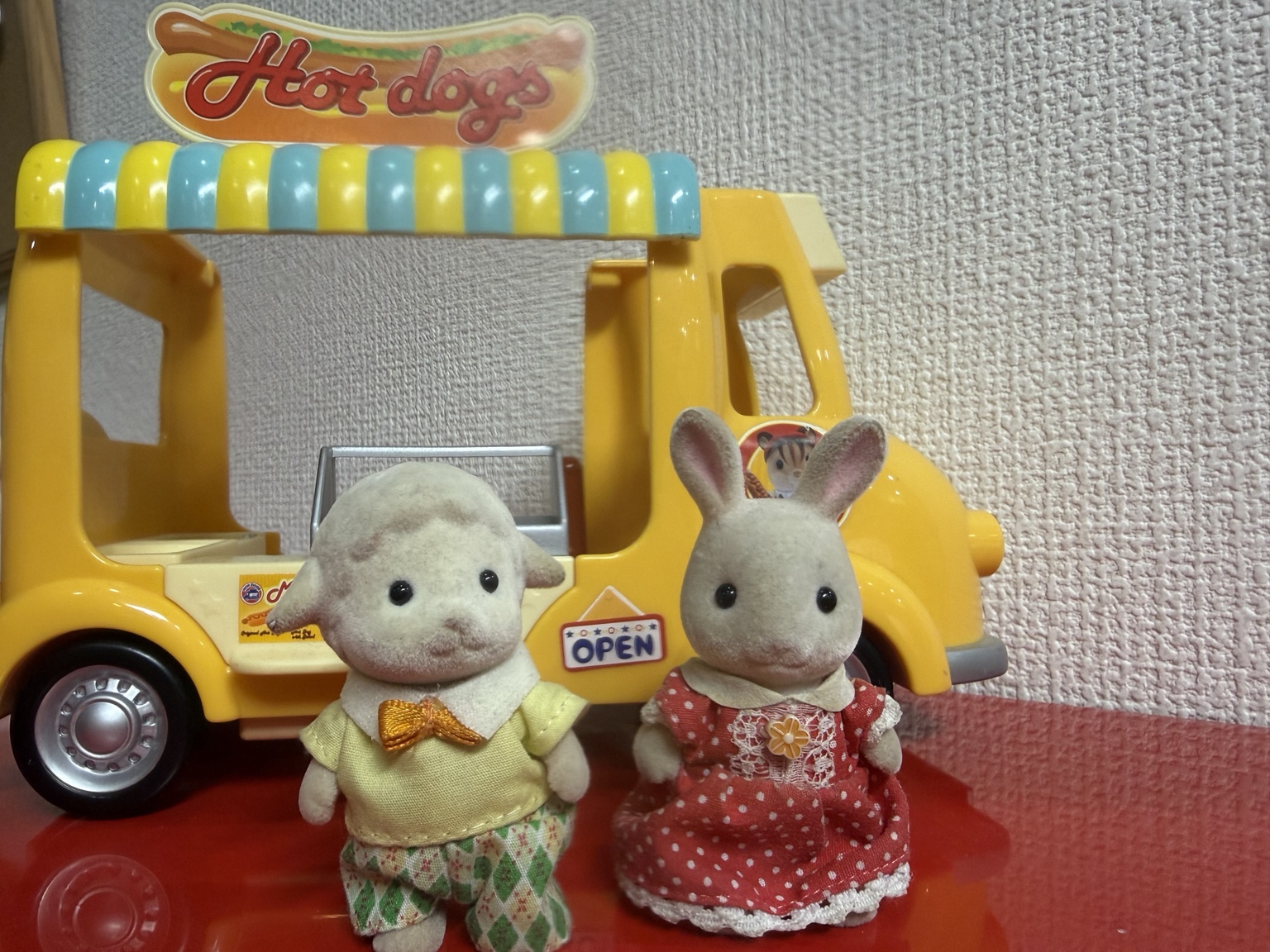
小さな指の、大きなトレーニング!
タブレットやスマートフォンが普及した今、子どもたちは指先を細かく動かす機会が少なくなっているように感じます。
英語の「digital」には、デジタル機器に関係するという意味だけでなく、「指」という意味もあるんです。
だから、子どもたちにはもっと「デジタルな運動」、つまり指の運動をしてほしいと思っています!
こうした小さなキャラクターや小物は、手や指先を丁寧に、器用に使う練習にぴったりです。
だって、小さなバナナをスーパーの棚に置くのだって、簡単ではありません。パン屋さんの棚に小さなメロンパンを置こうとして、ほかのパンまで倒してしまうこともあります!
忍耐力も、集中力も、手先の器用さも必要です。
小さな指にとっては、なかなかいいトレーニングなんですよ!
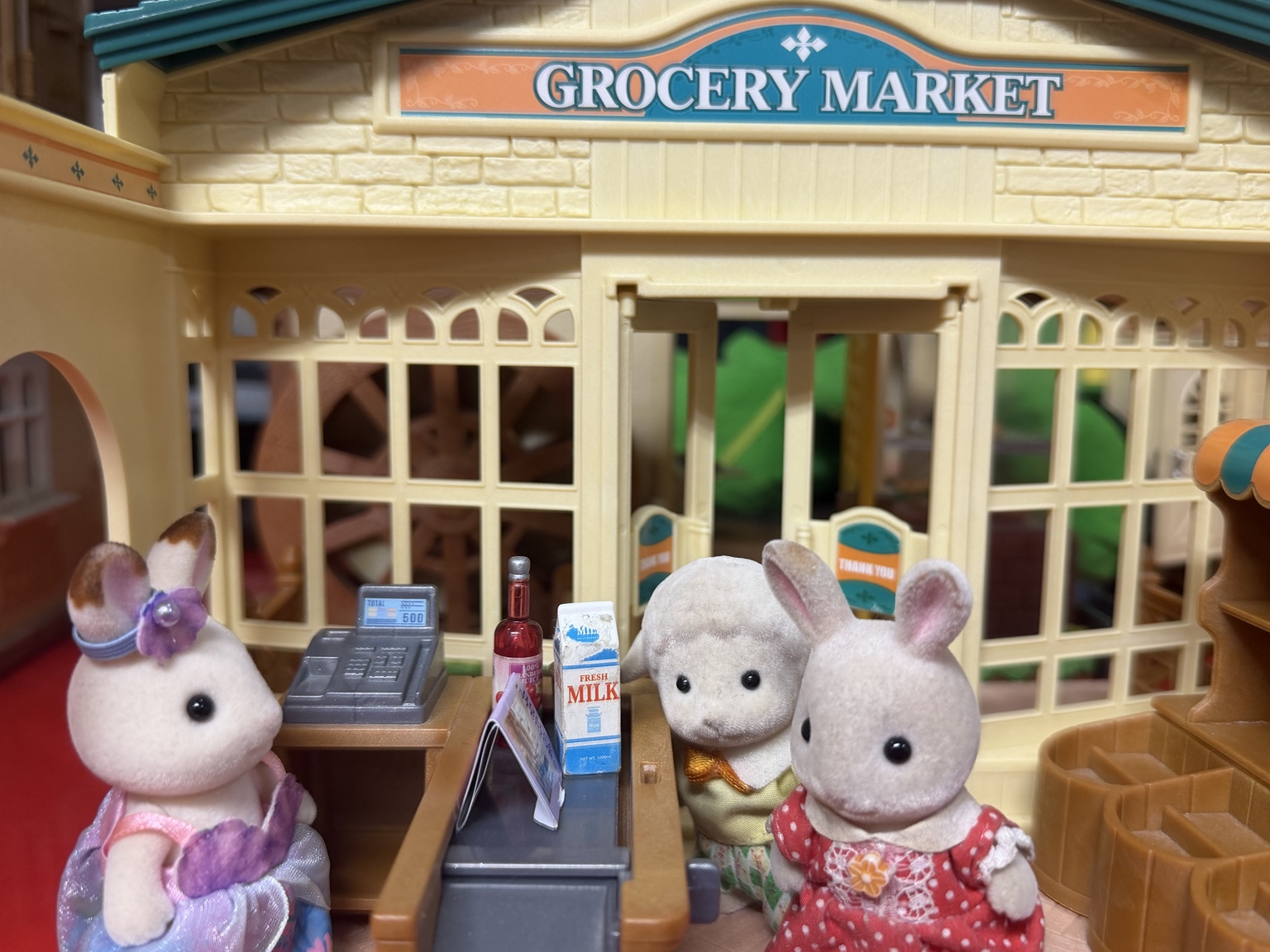
子どもの手にぴったりの世界
私がこうしたミニチュアの世界を大好きなもうひとつの理由は、小さな子どもにとって、現実の世界はとても大きいからです。
子どもたちの周りにあるもののほとんどは、子どものために作られたものではありません。何もかもが大きく、高く、重く、そして多くのことを大人が決めています。
でも、この小さな世界では、子どもたちが自分で決められます。
家具を並べたり、お店を整えたり、車を運転したり、誰がどこへ行くのかを決めたり。
自分の思いどおりに動かせる小さな世界を持つことは、子どもたちの自信につながると思っています。
大きくて、ときにはちょっと怖く感じる外の世界では、なかなか得られない自信かもしれません。
英語が生きた言葉になる!
でも、私がこれらのキャラクターを使ういちばん大切な理由は、子どもたちが実際に英語を使って表現する手助けになるからです。
まずはジャックとケイトから始めましょう。
ジャックは男の子。ジャックについて話すときは、英語で he や him を使います。
ケイトは女の子。ケイトについて話すときは、she や her を使います。
簡単ですね!
でも、このふたりを小さな世界の中に置いてみると、英語を練習する可能性がどんどん広がっていきます。
例えば、レッスンのゴールチェックでは、こんなやり取りができます。
What can she do?
(彼女は何ができますか?)
She can play with a yo-yo.
(ヨーヨーで遊べます。)
Where is he going?
(彼はどこへ行くところですか?)
He’s going to the bakery.
(パン屋さんへ行くところです。)
What is he going to buy at the bakery?
(彼はパン屋さんで何を買うつもりですか?)
He’s going to buy some croissants.
(クロワッサンを買うつもりです。)
今度は、お家のリビングで遊んでいるとしましょう。
What’s Kate watching on TV?
(ケイトはテレビで何を見ていますか?)
She’s watching a cooking show.
(料理番組を見ています。)
それとも、アニメを見ているかもしれませんね!
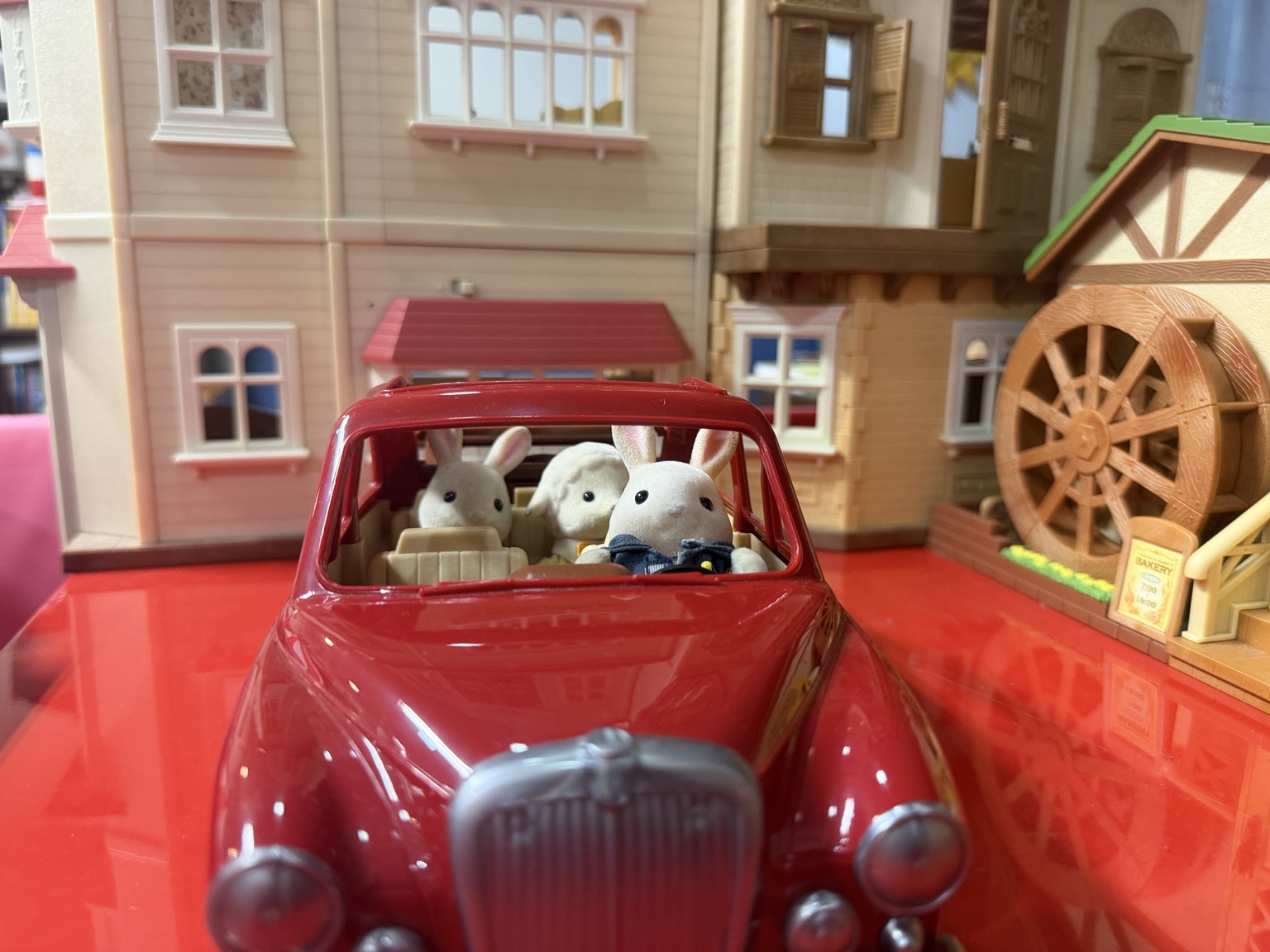
そして、あの赤い車はどうでしょう?
Where is Kate’s grandfather driving them?
(ケイトのおじいちゃんは、みんなをどこへ連れて行くところですか?)
He’s driving them to the country market.
(みんなを田舎のマーケットへ連れて行くところです。)
こうすると、英語は単に暗記しなければならない文章ではなくなります。
子どもたちが実際に見て、触って、自分で動かせる世界で、今何が起きているのかを表現するための言葉になるんです。
英語を使う目的が生まれるんですね!
さらに、フラッシュカードとミニチュアの小物やキャラクターを組み合わせることもできます。
例えば、神経衰弱のようなおなじみのゲームも、実際に触れるものと結びつけることで、もっと楽しく、もっとわかりやすい遊びになります。
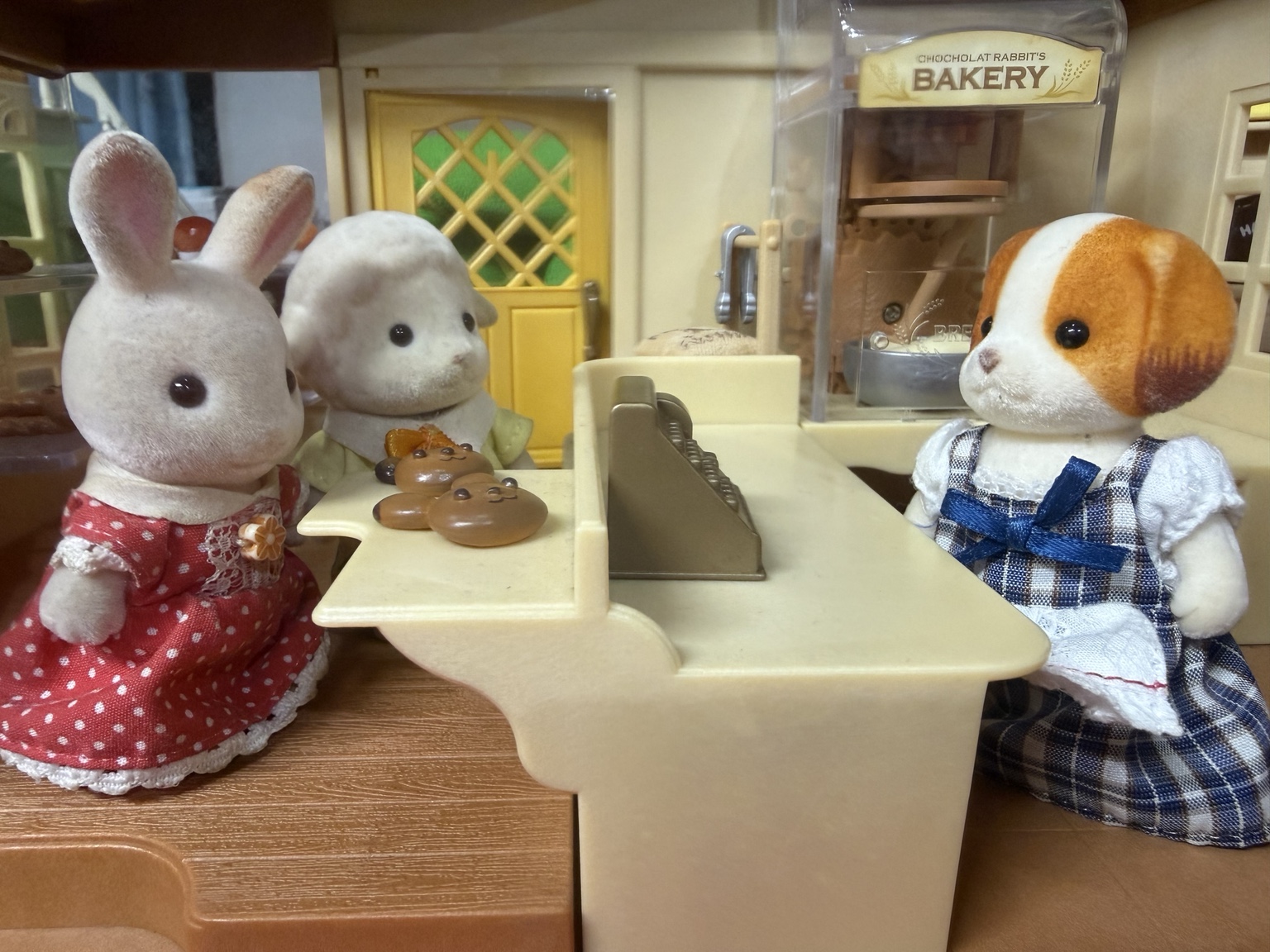
ときには、遊ぶこと自体が目的!
ゴールチェックが早く終わった子どもたちは、お家やパン屋さん、ホットドッグのトラック、ハンバーガーのワゴンなどで自由に遊びたいと言ってくることがあります。
それがまた、いいんです!
何でも英語の練習にする必要はありません。
子どもたちは、ただ遊びたいときもあります。
でも、そんなときにも、目と手を連動させる力や、指先を細かく動かす力、そして想像力を育んでいるんです。
そして、レッスンの決まった活動から離れているからこそ、私にとっても、自然な形で英語を使う絶好のチャンスになります。
ときには、子どもたちにとって少し難しい、新しい質問をしてみます。
“What’s Kate doing?”
(ケイトは何をしているの?)
“Where should I put the broccoli?”
(ブロッコリーはどこに置けばいいかな?)
またあるときは、以前に勉強した英語をさりげなく復習します。
“What’s this?”
(これは何?)
“It’s an apple.”
(リンゴだよ。)
“What are these?”
(これらは何?)
“They’re bananas.”
(バナナだよ。)
テストもなければ、プレッシャーもありません。遊びを止める必要だってありません。
英語が、ただ一緒に遊んでいる時間の一部になるんです。
新しいことを学ぶときもあれば、すでに知っていることをもう一度使って身につけるときもあります。
しかも、楽しみながら!
もちろん、みんながリビングの家具をきれいに並べたいわけではありません。
車をものすごいスピードで走らせたいだけの生徒だっています!
何かを飛び越えさせたり。
ものすごいスタントを決めたり!
それだって、いいんです。
私たちの頭も、心も、手も、いろいろな方法で鍛えることができます。
そして、その途中で思いっきり楽しめたら?
それはもう、最高のおまけですね!
— ミッキー
この記事は、ミッキーが英語で書いた文章を日本語に翻訳したものです。
Meet Jack and Kate! — A Little World with Big Possibilities
Meet Jack and Kate!
Of course, these aren’t the official names of these Sylvanian Families characters. They’re the names we’ve given them here at Mickey Kids English School in Chiba City.
Our collection started off very modestly, but little by little, it grew into a whole community. In many ways, just like our school!
There are a few very important reasons why I’ve chosen to use these little characters and their miniature houses, shops, vehicles, and accessories in our classroom.
Little Fingers, Big Workouts!
With the arrival of tablets and smartphones, I feel that children aren’t getting enough digital exercise. And by digital, I mean their digits — their fingers!
These tiny characters and objects provide a wonderful opportunity for children to practice using their hands in careful, delicate ways.
After all, it’s not always easy to place a tiny banana on a supermarket shelf. And try putting a miniature melon pan on a bakery shelf without knocking everything else over!
It takes patience, concentration, and coordination.
Those little fingers are getting quite a workout!
A World That Fits Their Hands
Another reason I love these miniature worlds is that the real world is enormous when you’re a small child.
Most of the world around children wasn’t designed for them. Everything is bigger, higher, heavier, and often controlled by adults.
But here, children can take control.
They can arrange the furniture, organize a shop, drive a car, or decide where everybody is going.
Having control over a small world can give children a sense of confidence that isn’t always easy to find in the big, sometimes scary world outside.
Bringing English to Life
But the most important reason we use these characters is that they help children create and use real language.
Let’s start with Jack and Kate.
Jack is a boy. We use he and him when talking about him.
Kate is a girl. We use she and her when talking about her.
Simple enough!
But once we put these characters into their miniature world, the possibilities for language practice become almost endless.
For example, during our Goal Checks:
What can she do?
She can play with a yo-yo.
Where is he going?
He’s going to the bakery.
What is he going to buy at the bakery?
He’s going to buy some croissants.
Or perhaps we’re playing in the living room.
What’s Kate watching on TV?
She’s watching a cooking show.
Or maybe she’s watching a cartoon!
And what about that red car?
Where is Kate’s grandfather driving them?
He’s driving them to the country market.
Suddenly, English isn’t just a collection of sentences children are trying to memorize.
It’s a way for them to describe exactly what’s happening in a world they can see, touch, and control.
The language has a purpose!
We can even combine our flashcards with the miniature objects and characters, turning a simple game of Concentration into something much more interesting and concrete.
Sometimes, Playing Is the Goal!
When students finish their Goal Checks early, they often ask if they can play freely with the houses, the bakery, the hot dog truck, or even the hamburger wagon.
And that’s wonderful!
Not everything needs to become another English exercise.
Sometimes children just want to play.
And even then, they’re still developing hand-eye coordination, practicing delicate movements, and using their imaginations.
And because we’re no longer in the formal part of the lesson, it’s another wonderful opportunity for me to use English naturally, sometimes challenging the children with new questions.
“What’s Kate doing?”
“Where should I put the broccoli?”
Other times, I can casually revisit language they’ve already studied.
“What’s this?”
“It’s an apple.”
“What are these?”
“They’re bananas.”
There’s no test, no pressure, and no need to stop the game. English simply becomes part of what we’re doing together. Sometimes we’re learning something new, and sometimes we’re reinforcing something familiar, all while having fun!
Not everybody wants to carefully design a living room.
Some students just want to drive a car around REALLY FAST!
Maybe jump it over something.
Maybe perform a spectacular stunt!
That’s OK too.
There are so many different ways to exercise our minds, our hearts, and our hands.
And if we can have a whole lot of fun along the way?
Well, that’s an added bonus!
— Mickey

ミッキーキッズ英会話
スクール
MICKEY KIDS ENGLISH SCHOOL
幼児・小学生・中学生・高校生
千葉県千葉市中央区新宿1丁目24-4
フジタマンション201号室

